Inside The Manufacture: Making A Tudor: A Behind-The-Scenes Look, From Raw Material To Finished Product [Video]
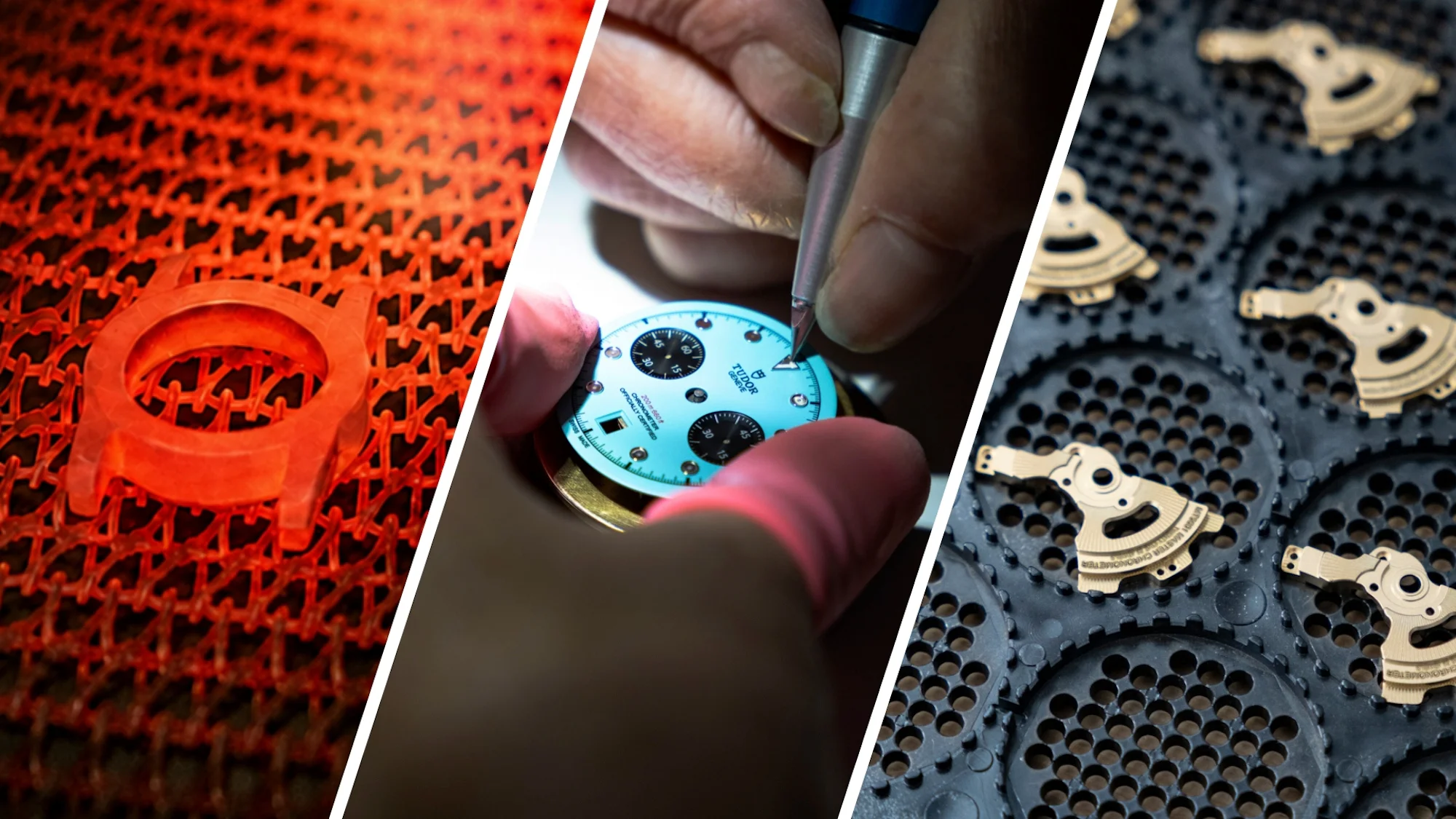
Earlier this year, Tudor invited a small group of watch media into its Swiss manufacturing network to see what "Swiss Made" actually means in practice—not a one-stop visit in a single day, but the full process from start to finish over multiple days. I've been on plenty of manufacturer tours, and I've never had access like this. The result is one video, broken into three parts: cases and bracelets; hand-painted and hand-lumed dials; movements and assembly.
Case and Bracelet
We start by looking at cases and bracelets. I've had my Tudor Pelagos 39 on my wrist for a couple of years now, and until recently I'd never given much thought to what "Swiss Made" on the dial actually meant, beyond the concept and branding tied to those two words. So, using my own Pelagos as the starting point, this segment traces how a titanium dive watch's case and bracelet are actually made, moving through three Swiss companies closely linked to Tudor: Joseph Baume, Orolux, and Detech.

Titanium case blanks are the start of the story.
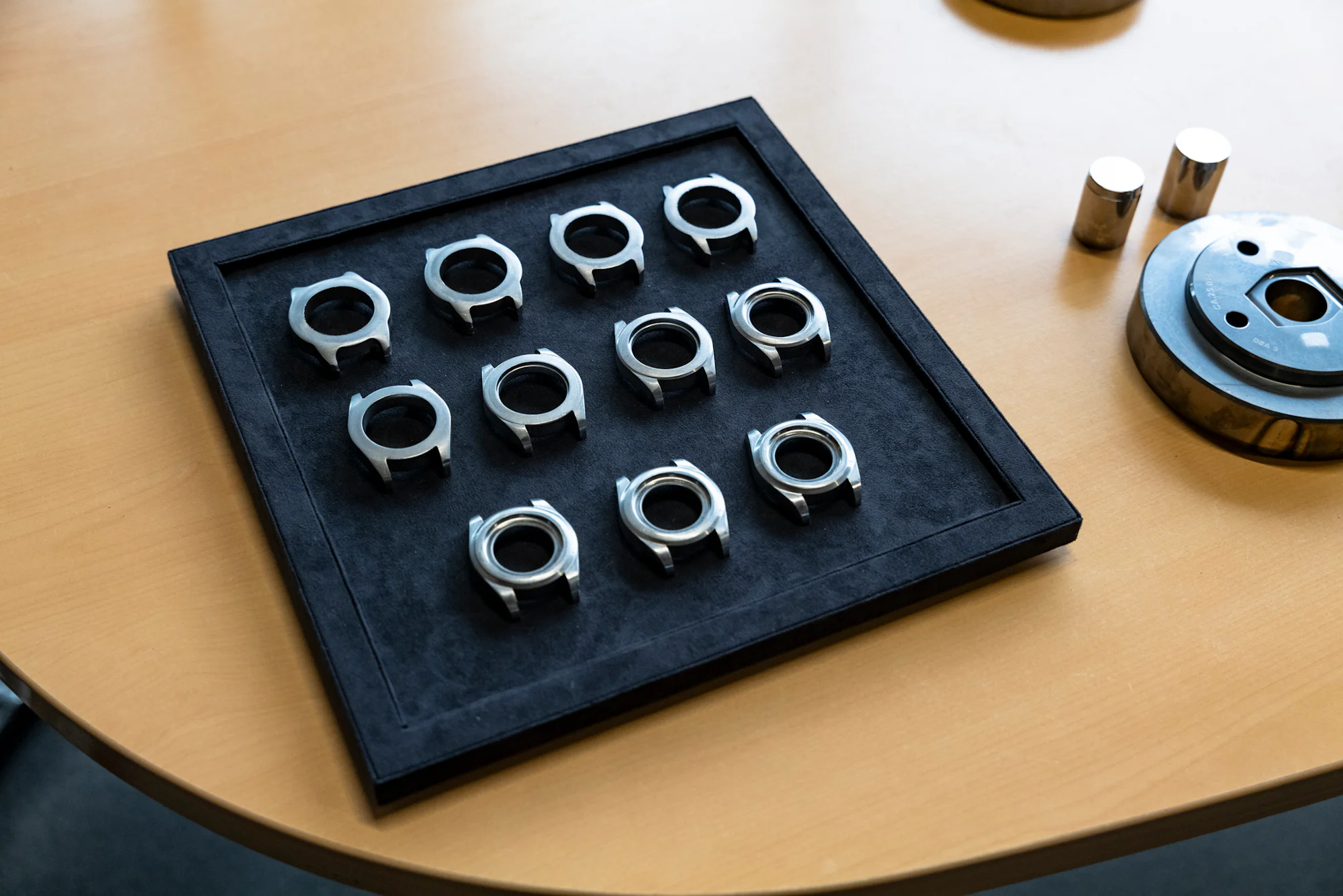
The progressive evolution of Tudor cases at Joseph Baume.
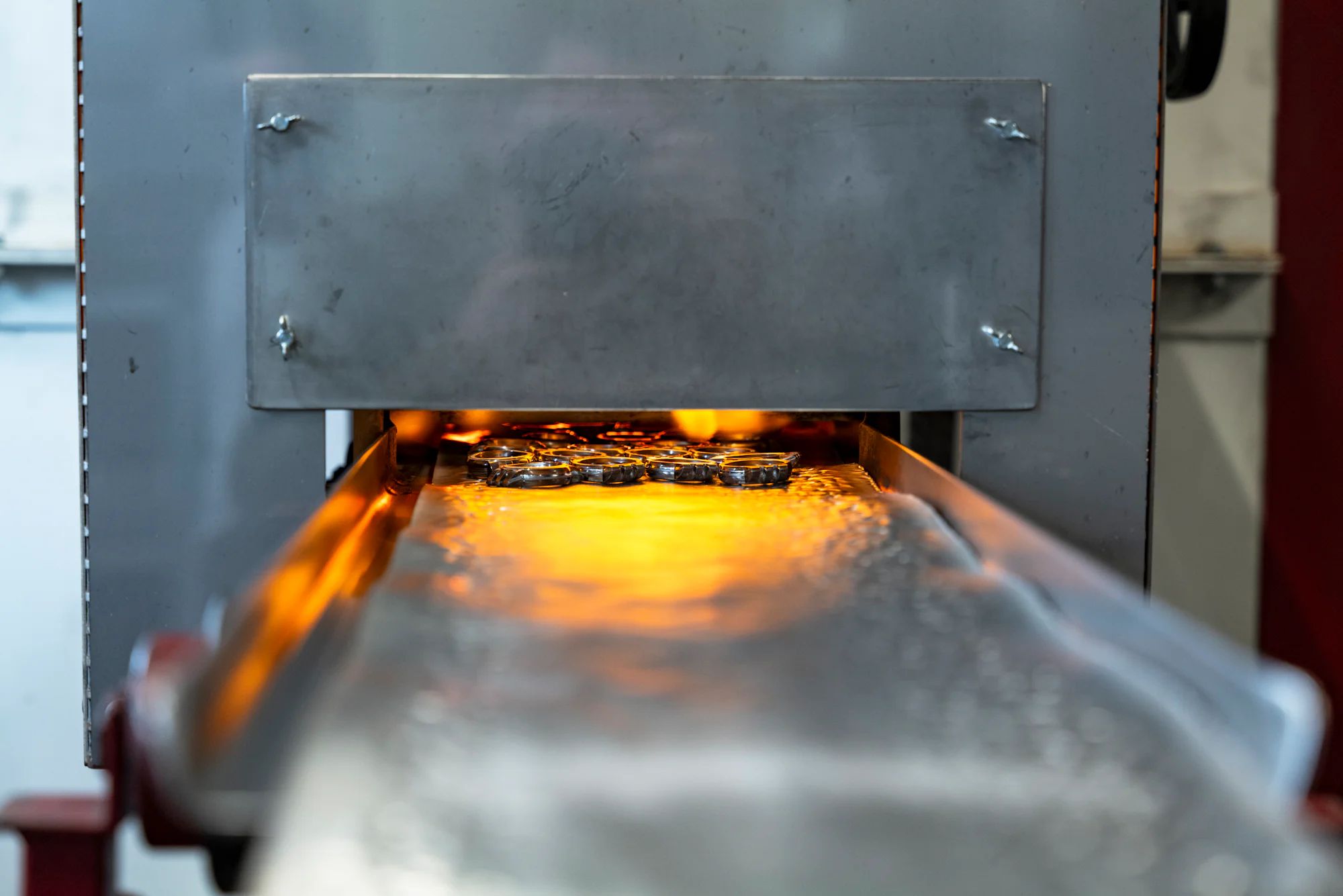
Heat treating in a special furnace.
The case begins at Joseph Baume, an independent forge where steel components are cold-stamped through up to fifteen strikes, while titanium cases, like that employed by my Pelagos, undergo hot stamping instead, heated to nearly 950 degrees Celsius and pressed into shape by a robotic arm. It's a more physical, almost blacksmith-like process than I ever would have expected from a modern watch, and honestly, watching a red-hot titanium blank get slammed into shape was my favorite part of the whole tour.
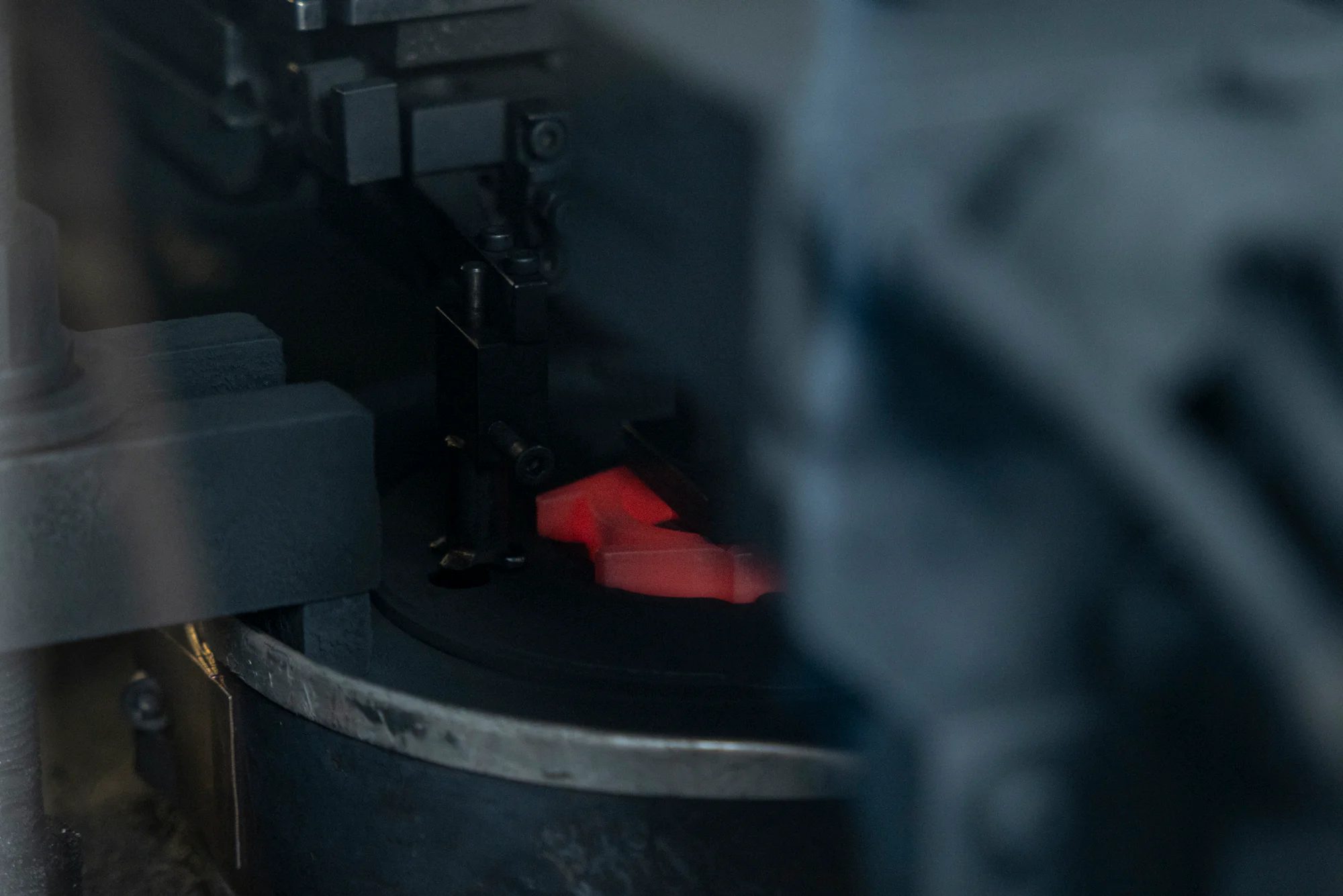
The red-hot titanium of a Pelagos case.

Before and after hot stamping.
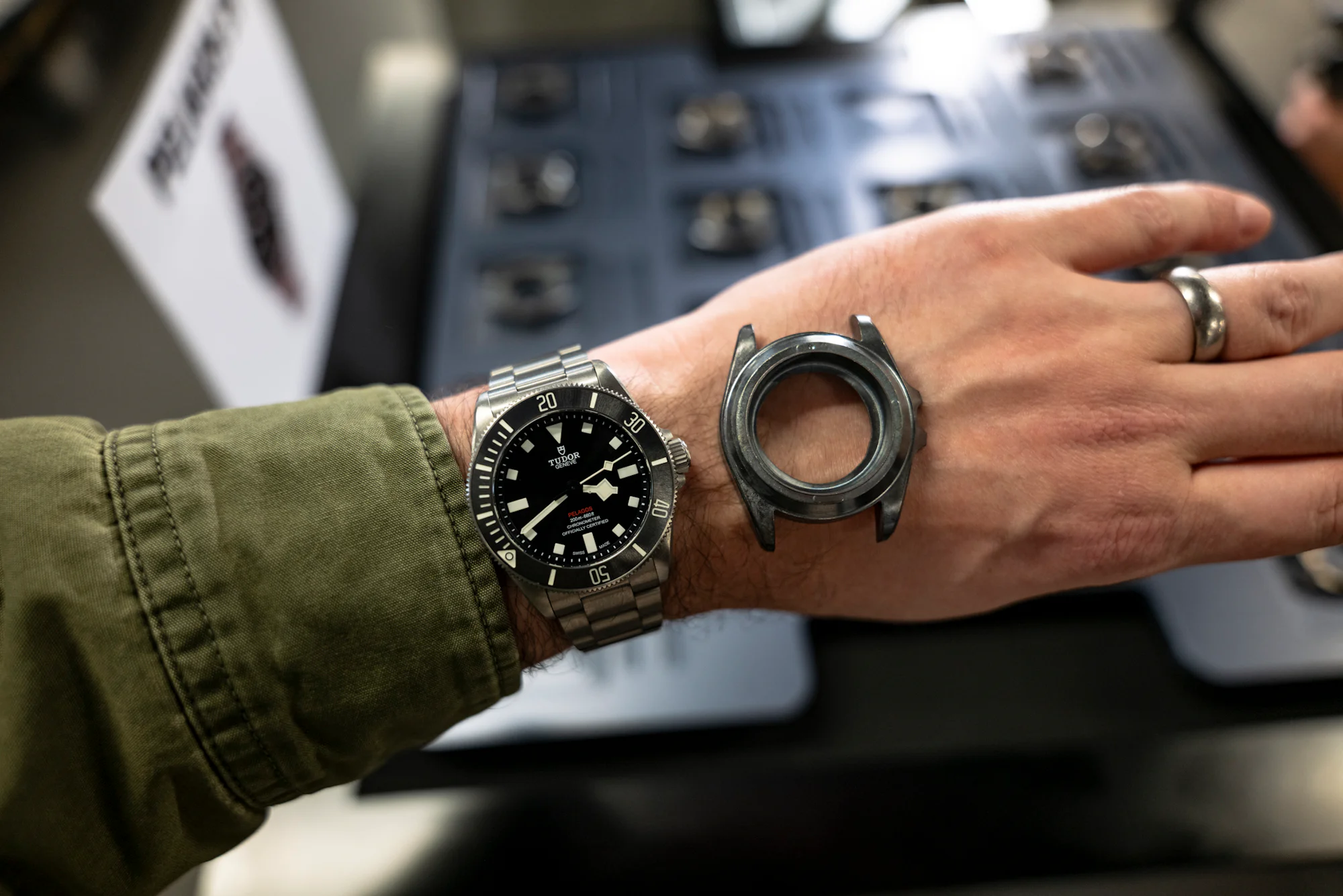
My own Pelagos 39 next to a not-quite-ready case.
From there, I followed the roughed components to Orolux, where CNC precision takes over from raw force. Precitrame machines mill, drill, and tap the case and bezel to final tolerance, apply the brushing and beveling that give the case its finished surface, including the signature helicoidal brushing on the lug tops, and hand off to trained specialists for final polishing and inspection before a technician hand-assembles the bezel, crystal, and case together. I also stopped by a separate supplier, Detech, which handles the bracelet, machining raw steel, titanium, and bronze stock and then "rectifying" components like clasp arms to within 0.1mm so the finished bracelet closes without unwanted play or friction.
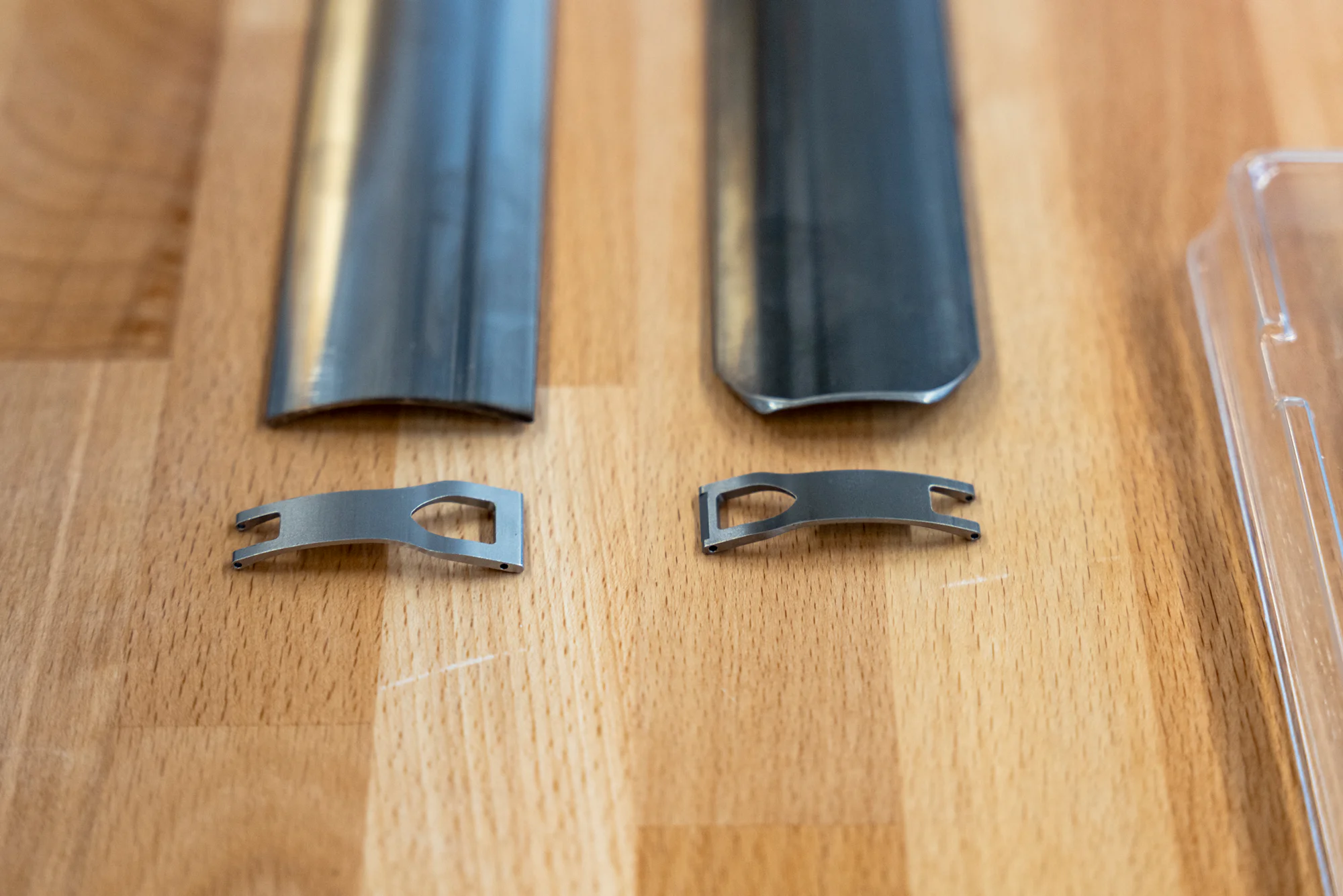
Bracelet components are milled from specifically shaped bars of steel and titanium.
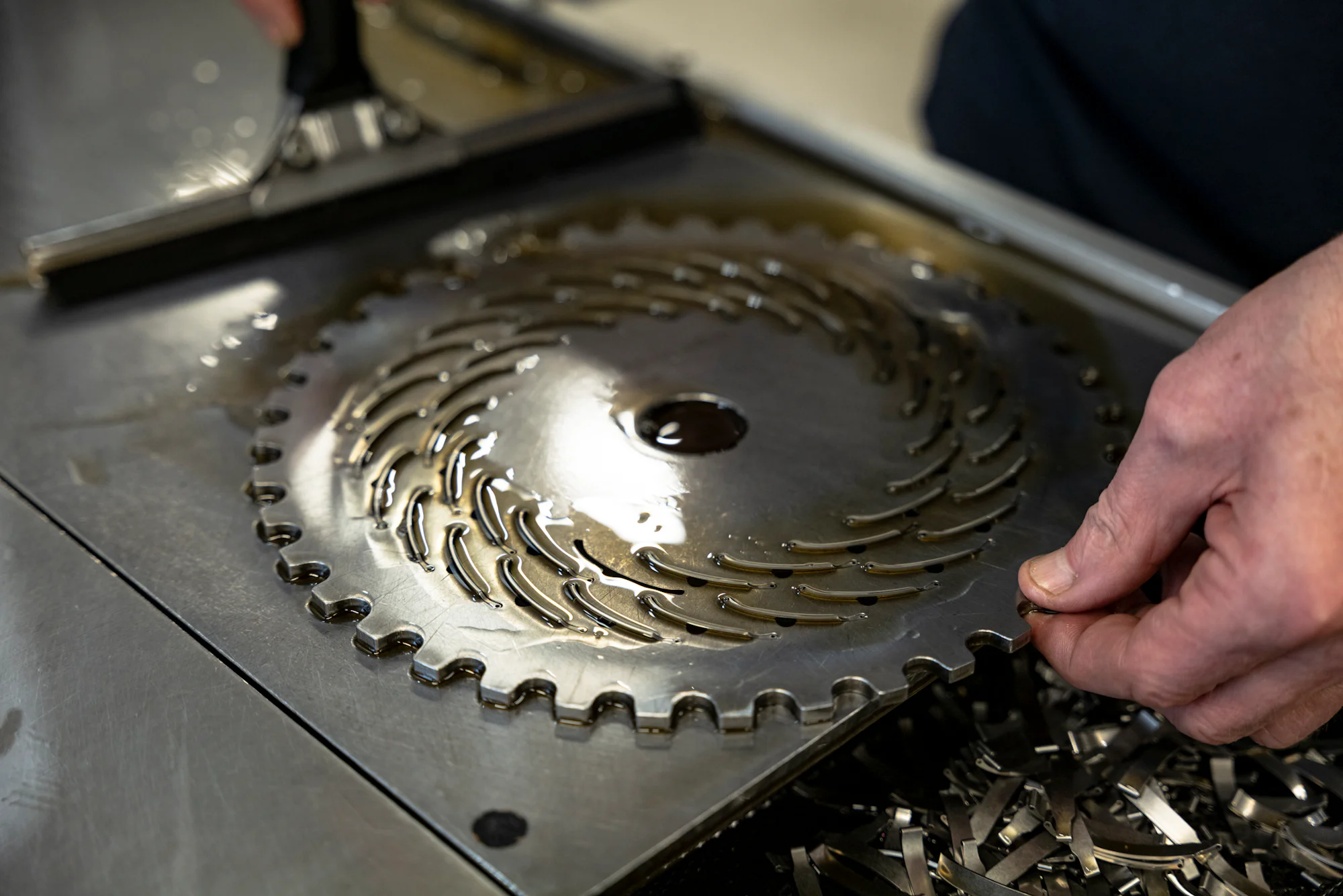
The rectifying stage, which is a bit like sanding, helps to achieve tight tolerances of parts that rotate together.
What stuck with me most is how much a Tudor case reflects both sides of Swiss manufacturing at once: the forging of the old world, the CNC precision of the modern. From there, it was on to Tudor's dial producer, where rolls of brass become brightly painted dials—and where I tried my hand at applying lume to a Black Bay Chronograph. Spoiler: it doesn't go well.
The Dial
For this stretch of the trip, we traveled to Montremo in La Chaux-de-Fonds, an independent manufacturer that specializes in dials. Much like the case, a Tudor dial starts simply: a coiled band of brass, just half a millimeter thick. From there, the process has several stops as the dials are treated, cut, painted, lumed, and prepared for life on your wrist.

Cutting a recognizable element for a modern Tudor watch.
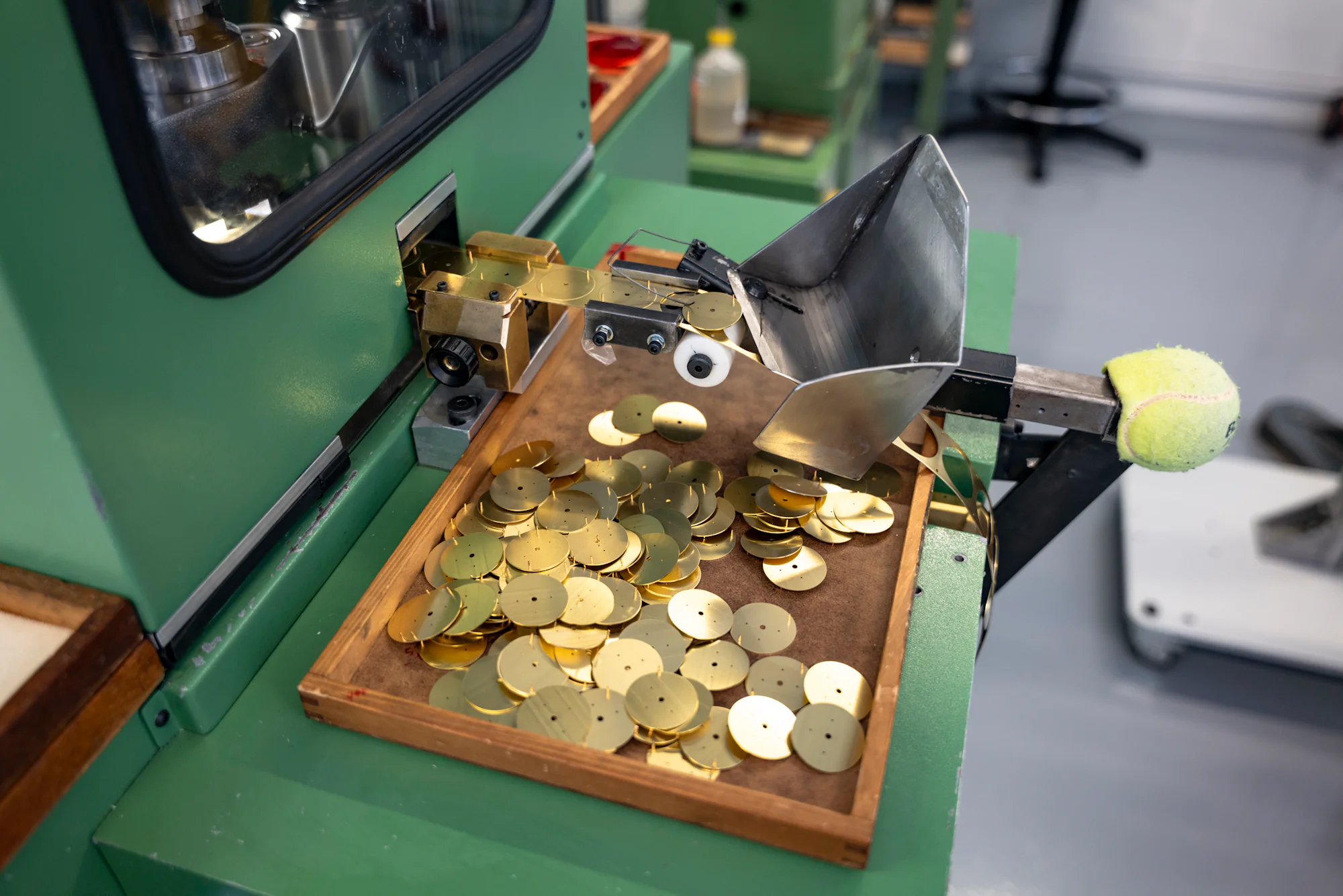
Dial blanks cut from brass.
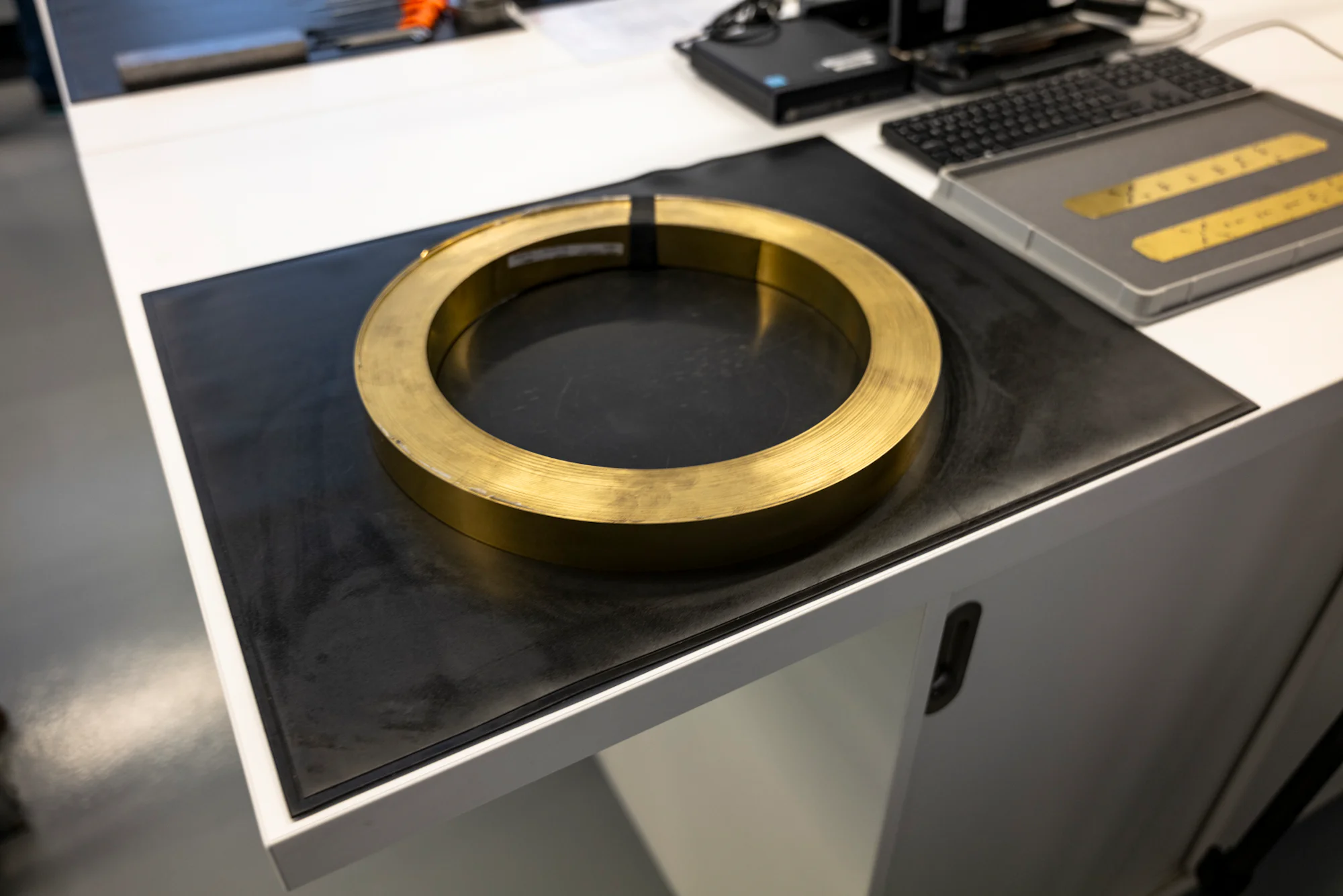
Where the dials start.
After the dials are punched out of the raw material, Montremo hand-mixes its own lacquer, and I watched a color get airbrushed onto a dial in a paint booth, sometimes in as few as a couple of coats, sometimes up to thirty separate passes depending on the finish. For a chronograph dial like the Black Bay Chrono Pink or Flamingo Blue, though, painting is only half the story: the subdials get machined right down through that fresh lacquer to bare brass, then the whole dial goes through a galvanic bath, essentially an electroplating dip, where timing and temperature decide everything.
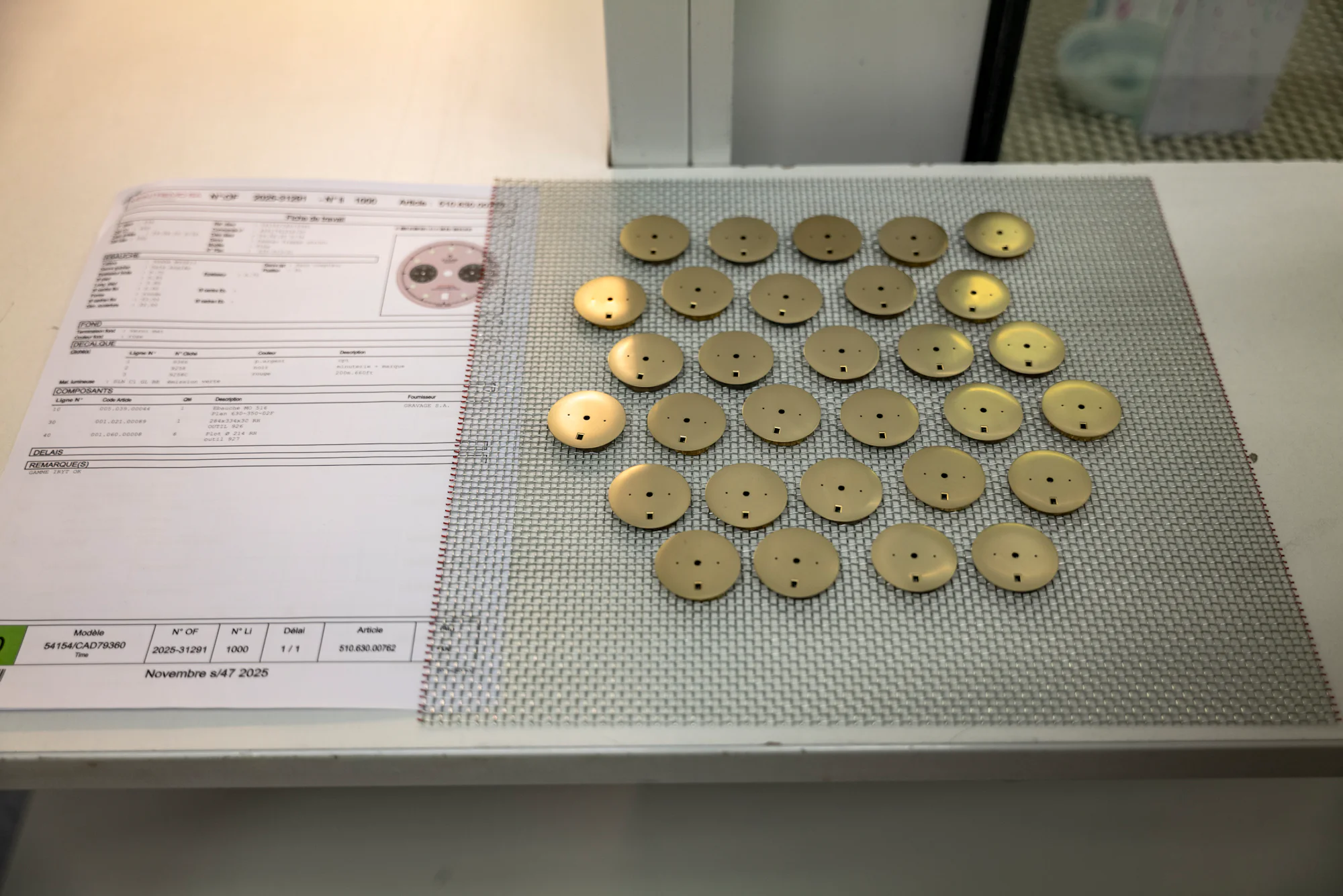
Dials prepped for paint.
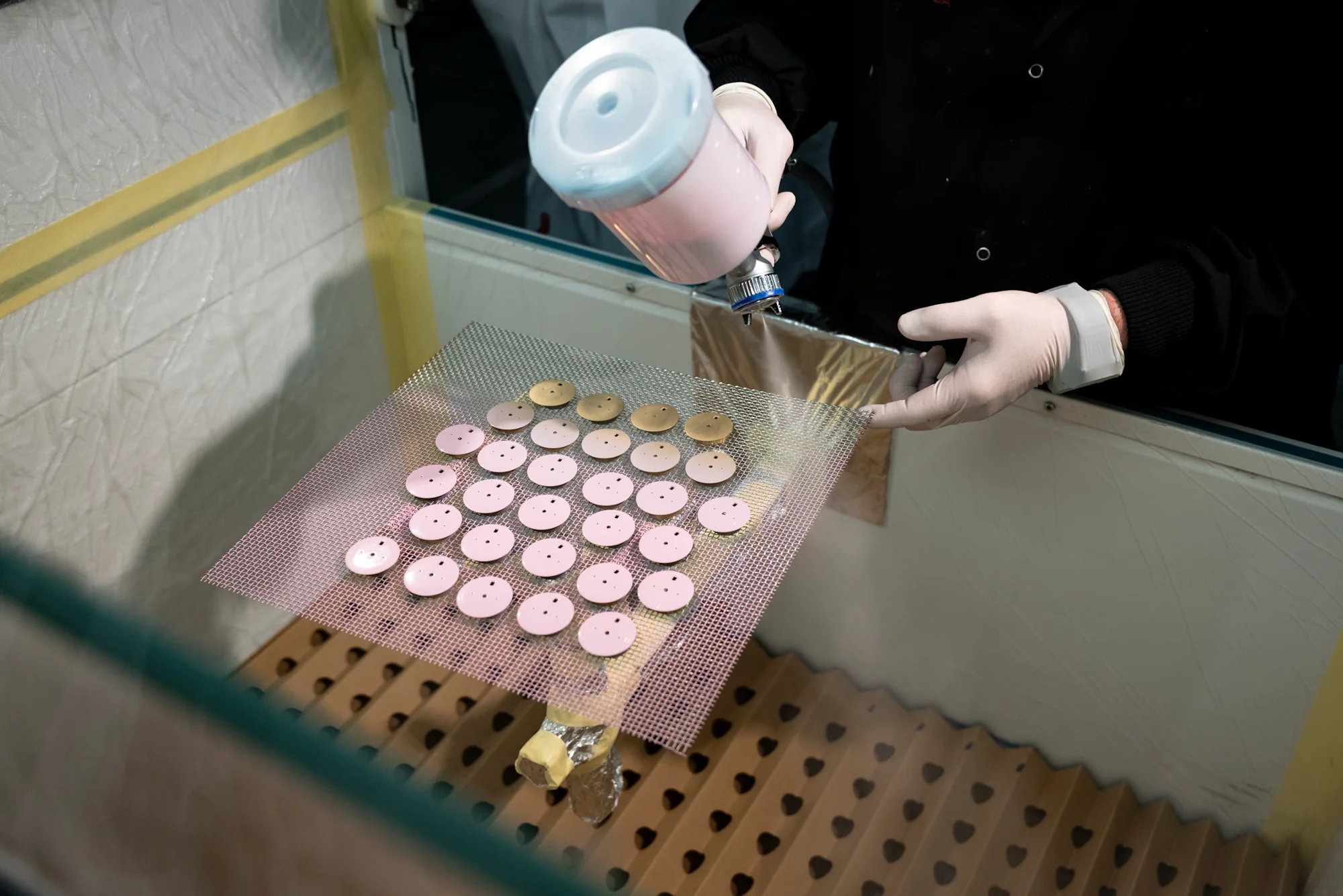
A selection of Black Bay Chronograph Pink dials are hand-painted.
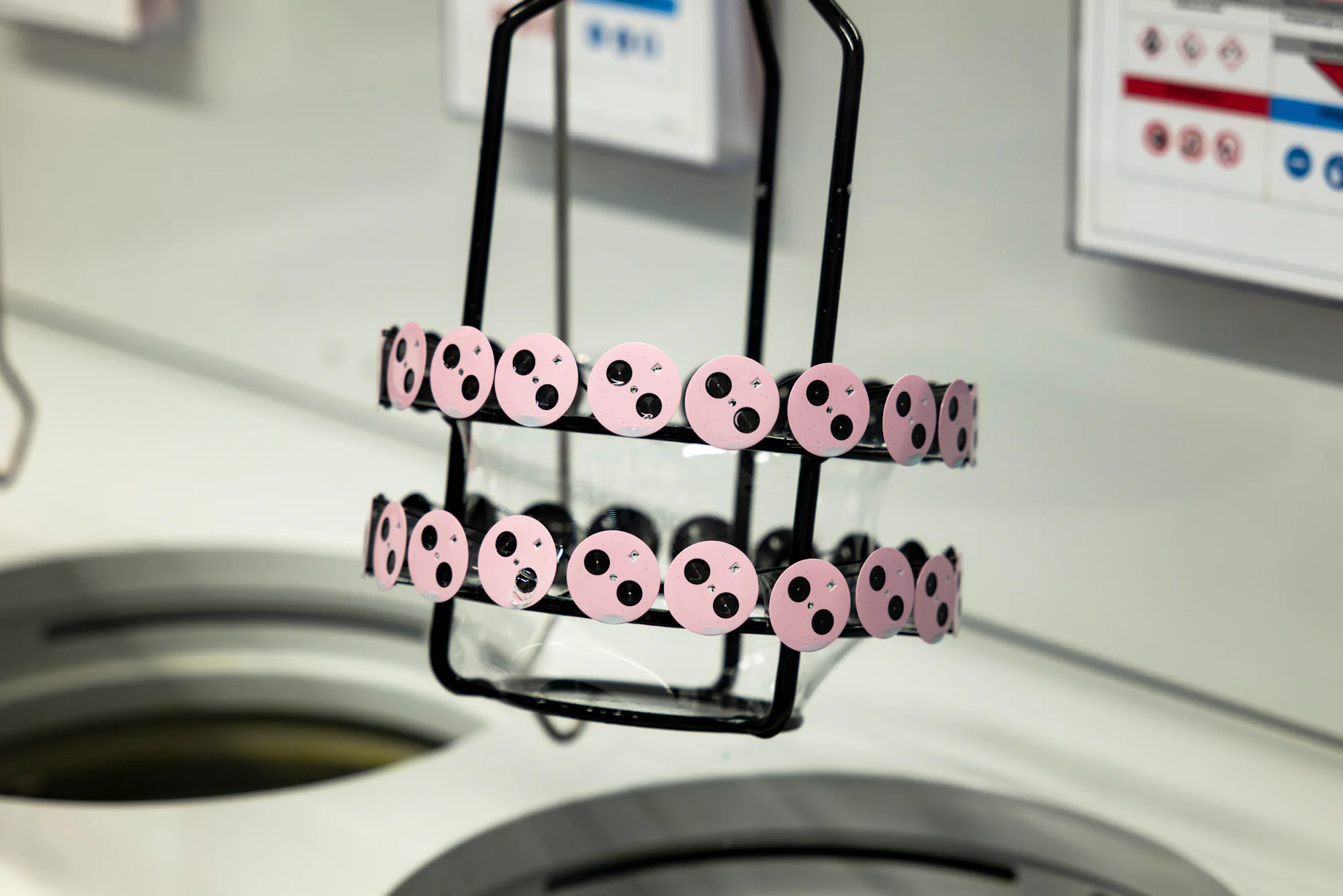
The dials after a galvanic bath to ensure the perfect black coloring for the chronograph subdials.
From there, the dial goes through pad printing, a genuinely clever process where a silicone pad picks up ink from a laser-etched steel plate and presses the brand signature, markings, and numerals onto the dial in one motion. Then comes the part that surprised me most: the applied markers are installed entirely by hand, one at a time, each with its own unique foot pattern, so it's physically impossible to place them in the wrong spot. I even tried my hand at one of the final steps, applying the Super-LumiNova myself, and I can say with confidence that Montremo won't be extending me a job offer.
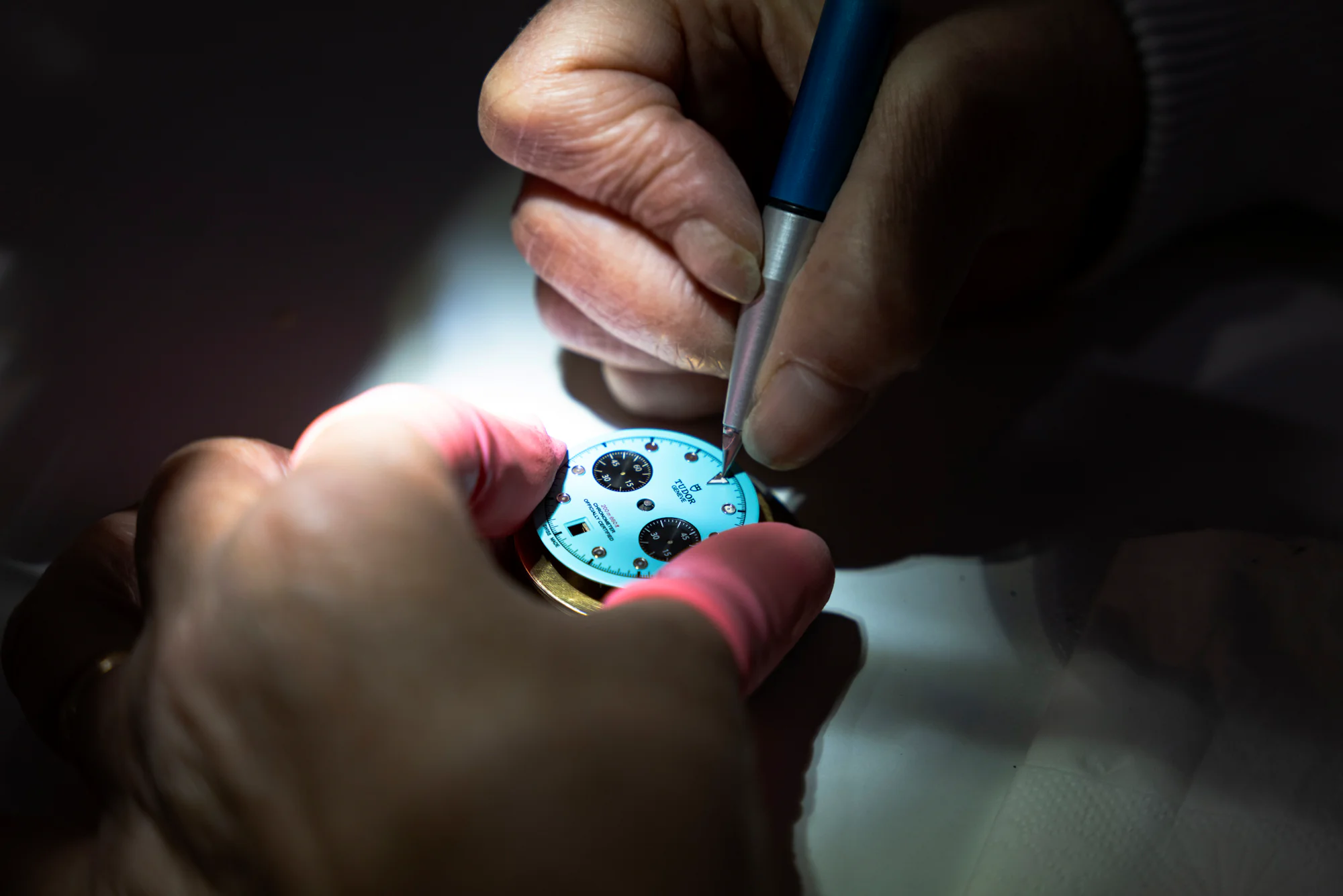
What stuck with me watching the dial come together is just how much of what looks like a purely mechanical or chemical process still comes down to a trained hand and a steady eye—from the paint booth to the marker installation to a tiny pen that applies lume like icing on a truly tiny cake. It's all a lot more human than I expected. From there, it was on to movement production and final assembly, at Tudor's home facility in Le Locle.
Movement & Assembly
We've covered the case, the bracelet, and the dial, so for the final part of Making a Tudor, we get a behind-the-scenes look at the part of my Pelagos I take most for granted: the movement. That journey starts at EMP, a Tudor subsidiary in Tramelan that machines the mainplates and bridges every movement is built around, starting, like the dial, from raw brass. Precitrame CNC rotary transfer machines cut, drill, and tap each plate in a single clamping to a tolerance of seven microns, the kind of precision that eventually lets Tudor mass-produce movements capable of Master Chronometer performance.
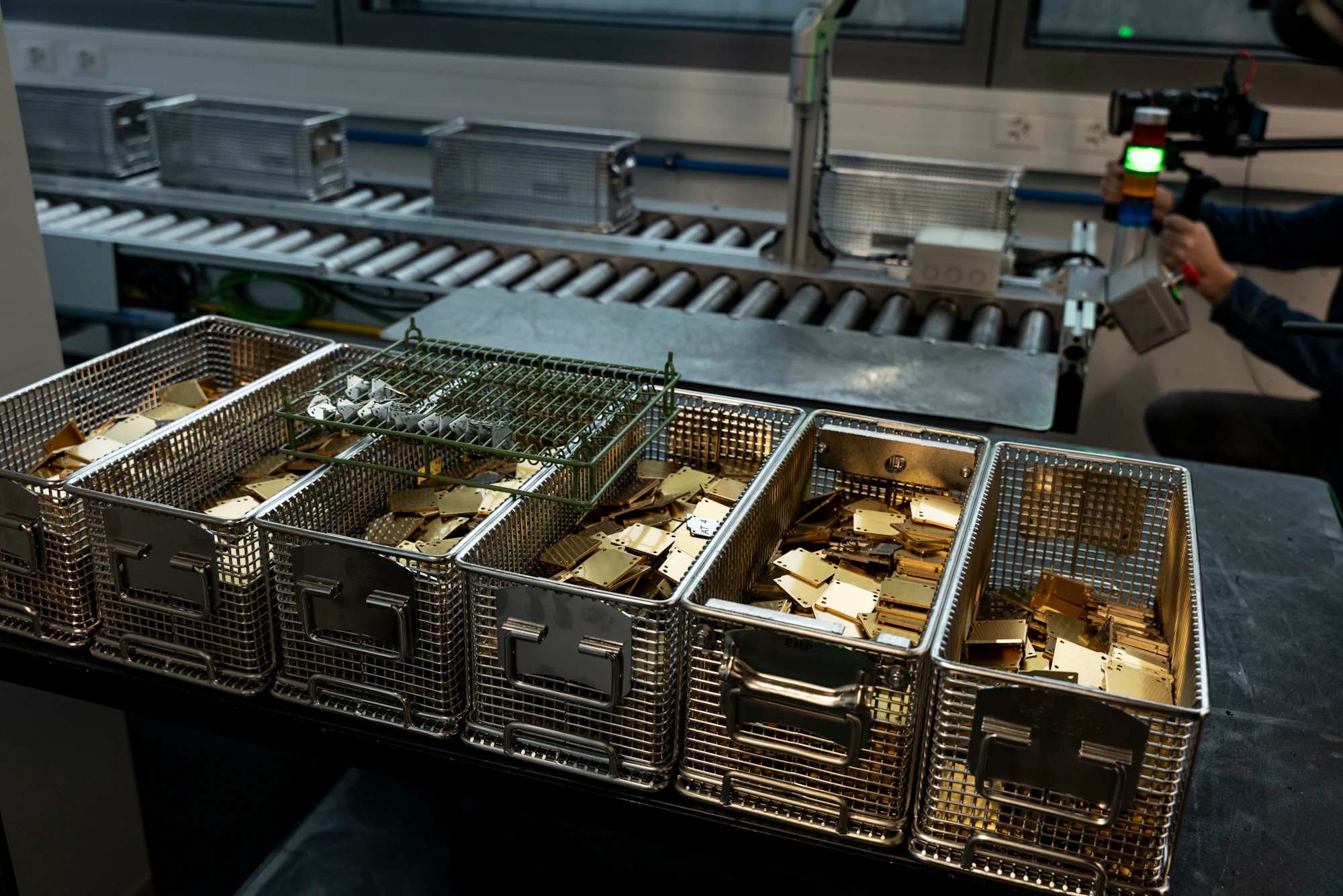
Movement blanks before automated machining.
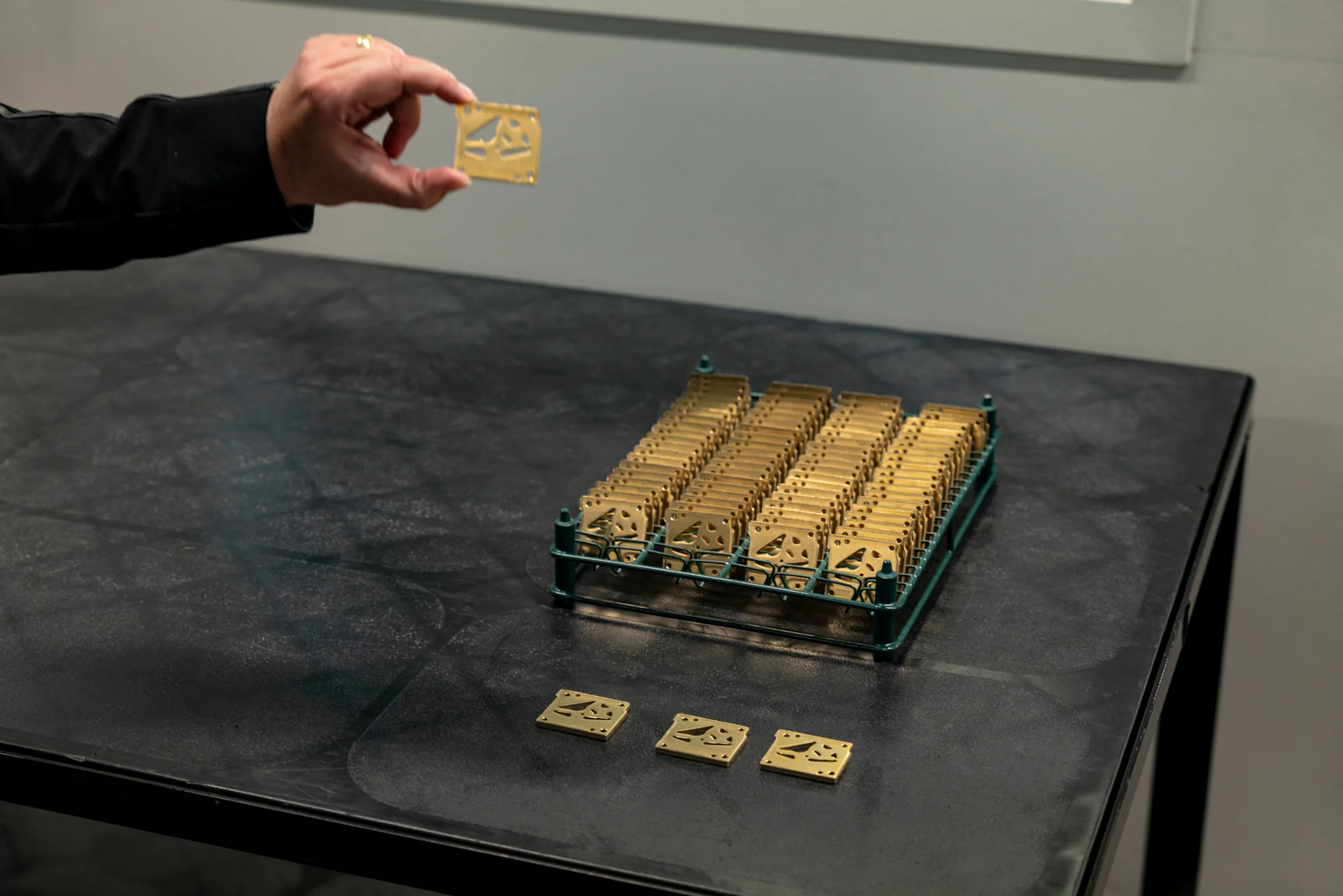
Movement blanks in a stage of machining.
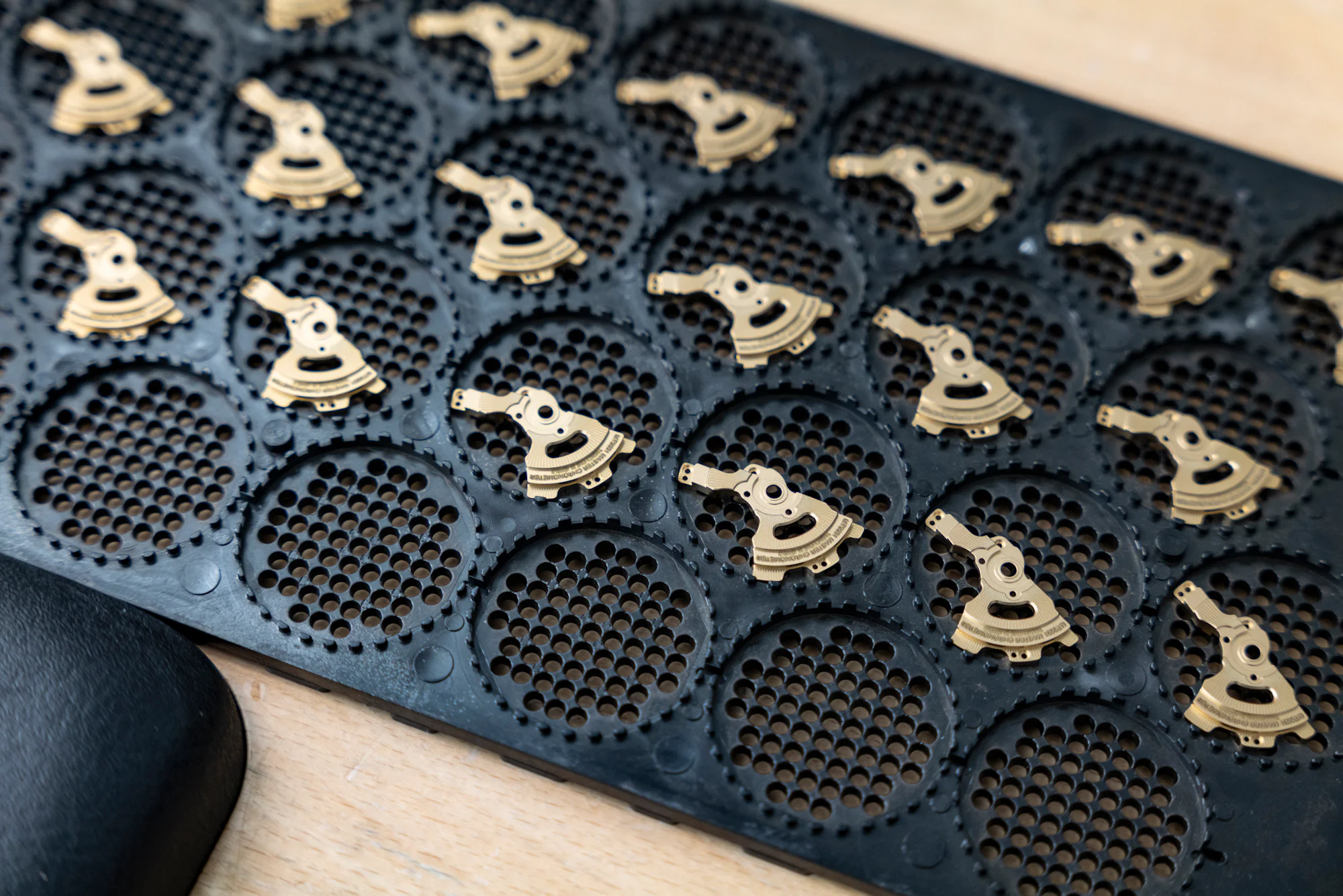
Components being cut and prepared at EMP.
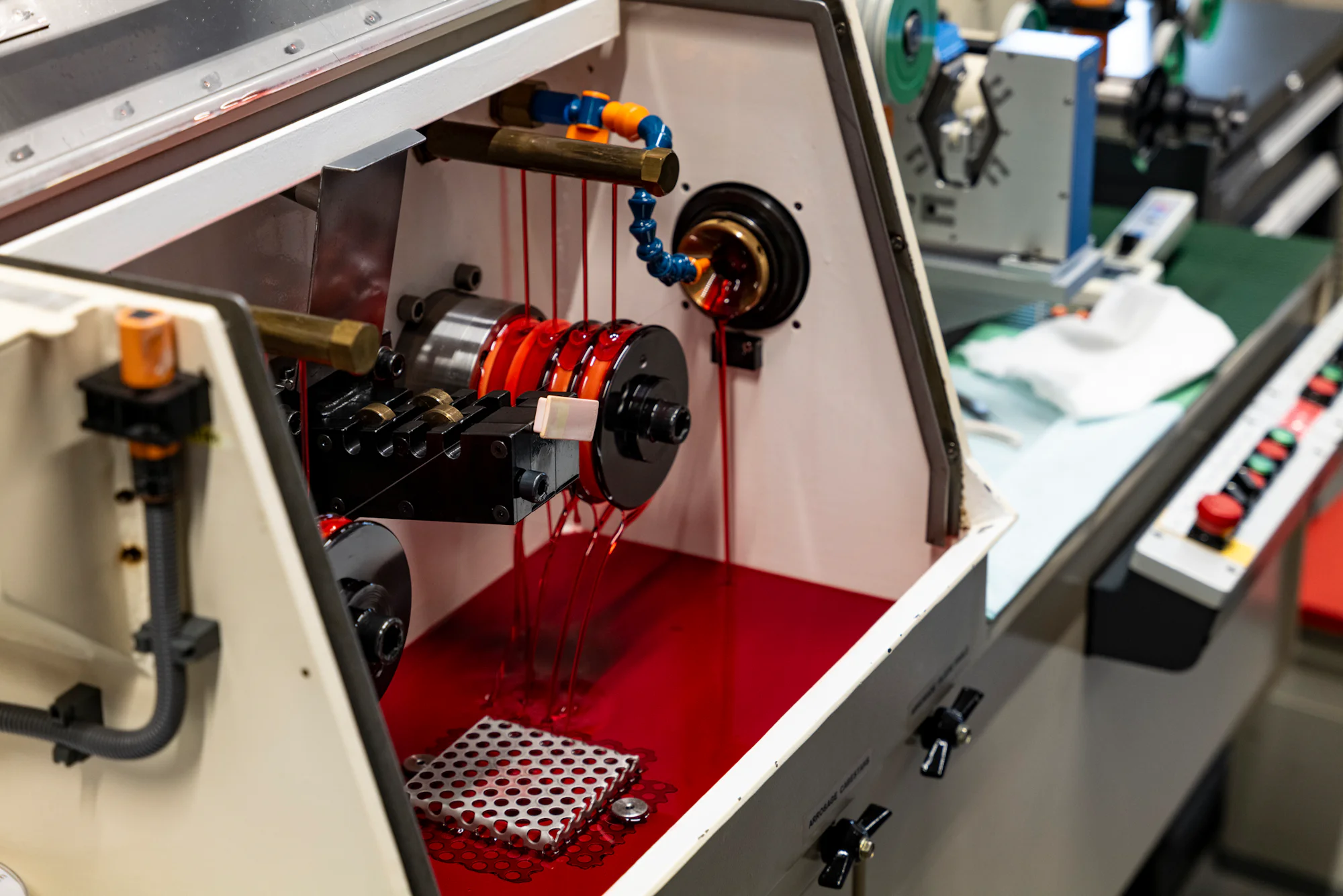
Just one of the many machines that shape a hairspring.
Down the road in Le Noirmont, the same town where Tudor's cases are forged, another subsidiary called Kenitec makes the hairspring, arguably the single most temperamental part in the whole watch. It starts as a half-millimeter wire, gets drawn through diamond dies more than thirty times until it's remarkably thin, flattened, coiled, and then vacuum heat-treated at around 600 degrees Celsius to lock in its elasticity before being paired, one spring to one balance wheel, to hit the precision Tudor needs for certification.
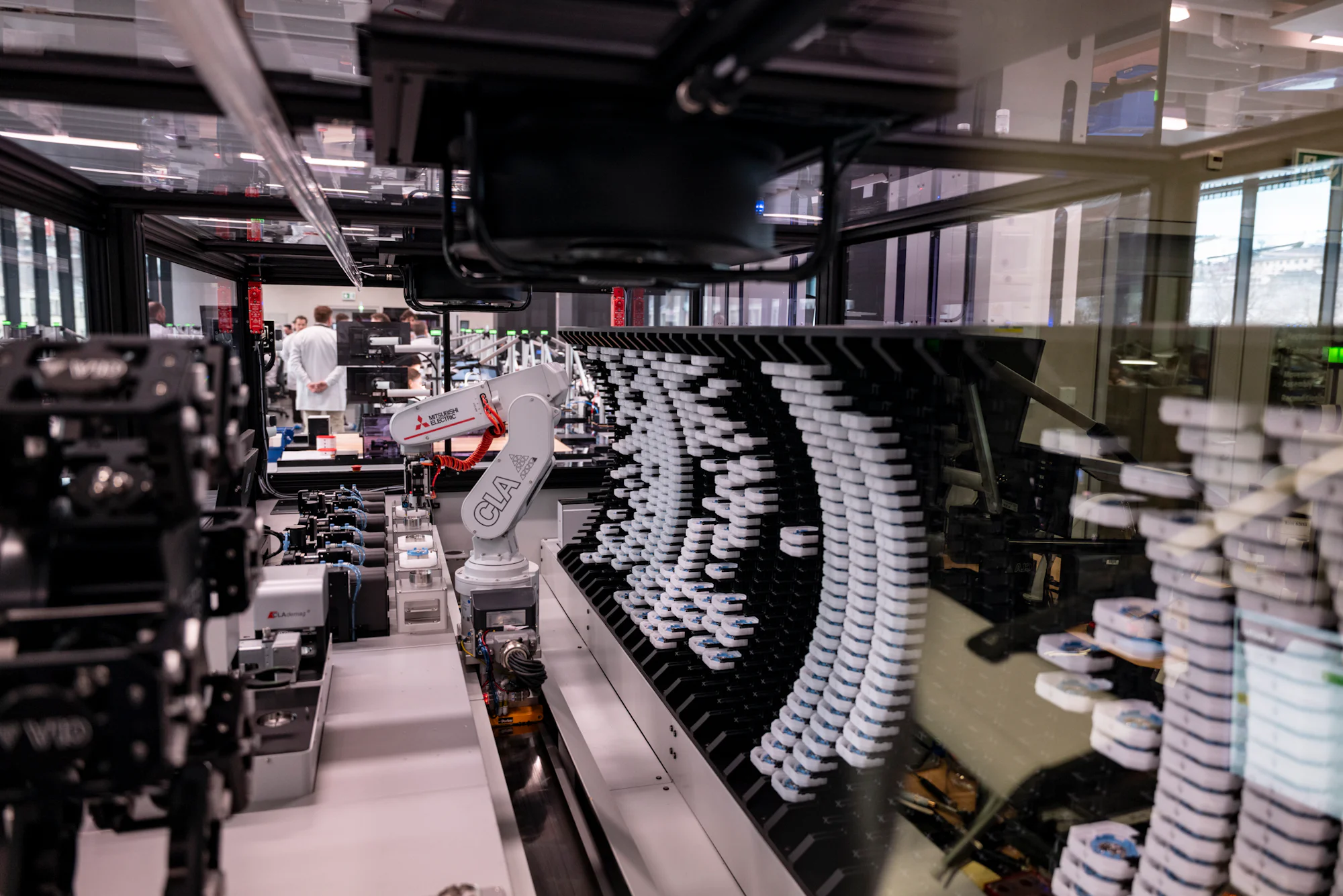
A robotic arm coordinates assembled movements that are being tested for a basic level of timekeeping.

Completed Tudor watches undergo quality checks.
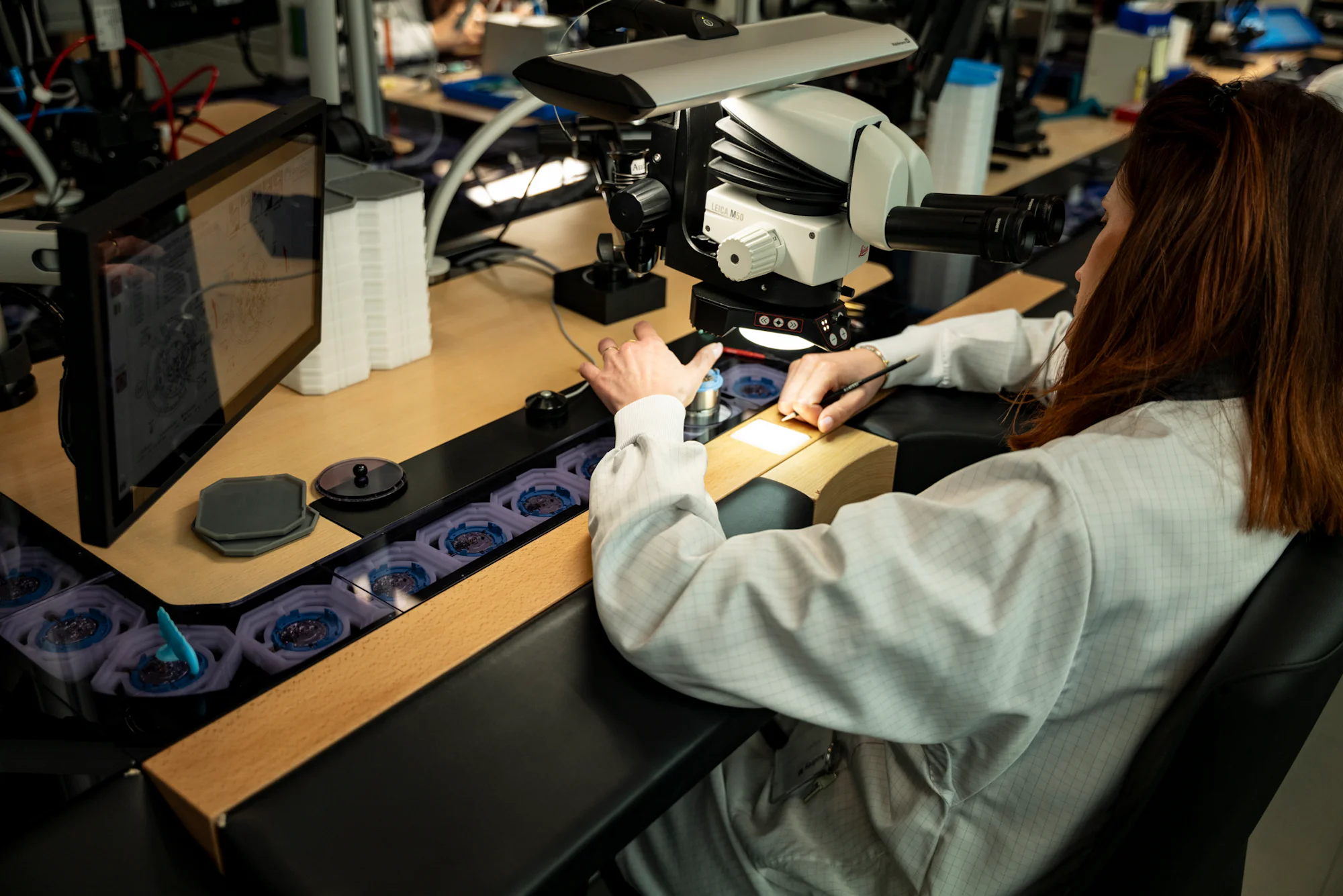
A movement technician prepares movements for final watches. Notice the conveyor belt of RFID-tracked movements that is integrated into the workbench.
All of these components converge at Kenissi, the movement house Tudor created in 2016, and which shares a building in Le Locle with Tudor's own final assembly facility. Every mainplate carries an RFID tag that tracks it through an assembly line built directly into the watchmaker's own station, and once assembled, each movement gets a baseline chronometric check before crossing the hall to Tudor's manufacture.
That's where I learned something I didn't expect: Tudor keeps no stock. The entire building runs on an automated system that builds watches to order, moving parts and finished pieces through a network of tray-sized elevators so each of the facility's assembly cells, teams that stay together and can build any reference in the catalog, gets exactly what it needs, when it needs it. From there, every watch passes through Tudor's Reliability Control, a fully automated battery of tests running around the clock, including water-pressure tanks, GPS-synced precision checks, and 15,000-gauss magnets for antimagnetism trials, before it's strapped, boxed, and shipped out.
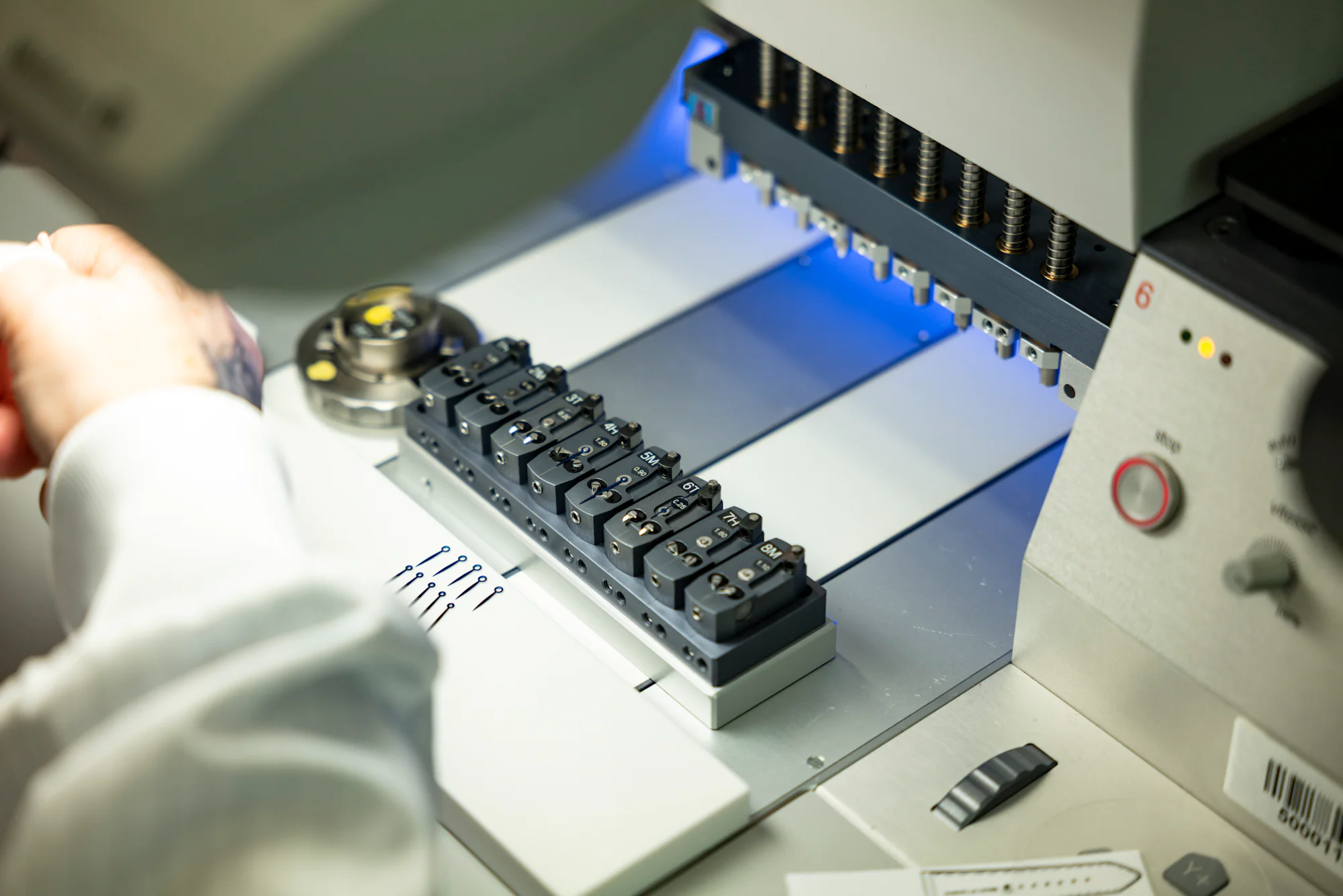
The last stop in that whole chain is wherever you're watching this video, your wrist. Across multiple days and a handful of towns tucked into the Jura mountains, I watched a titanium case get slammed out of a furnace, a dial get hand-painted and hand-lumed, and a movement get machined down to seven microns, and what stuck with me is how much of that entire chain, logistics, old-school handcraft, and genuinely cutting-edge automation, has to work in lockstep to end up as something as ordinary-seeming as the watch on my arm. Mine happens to be a Pelagos. Yours might be a Black Bay Chrono or a 58. Either way, thanks for following along to see how a Tudor is made.
You can watch the full video here.
from Hodinkee https://ift.tt/8IzF6eV
Post a Comment